Scarves, Badges or Banners: Three Ways Supporters Show Club Colours
Compare scarves, badges and banners by how you carry, display and keep them, then choose a way to show club colours that suits your routine.
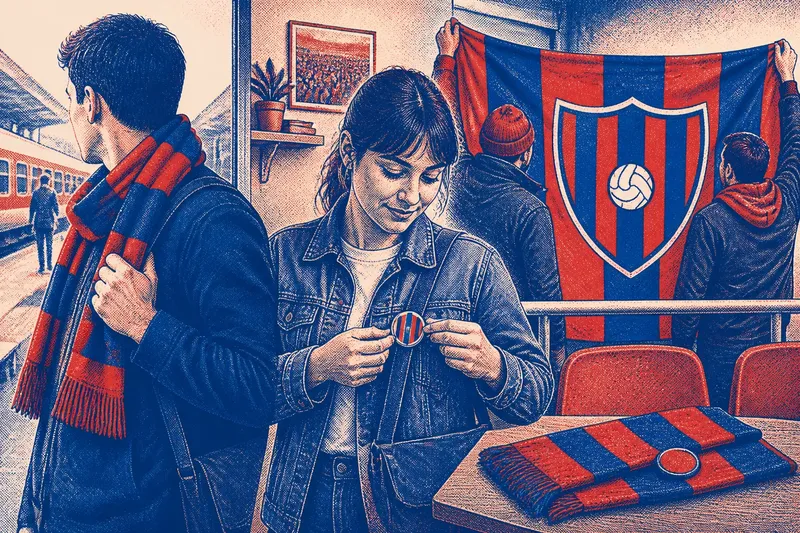
Scarves, badges and banners show club colours in different ways: one travels on your body, one stays close to a garment or bag, and one takes space in the open. The right choice depends less on which object looks most devoted than on where you want to display it, how much you want to carry and whether it needs to survive ordinary use.
Think of each as a different scale of support. A scarf is visible and portable; a badge is compact and personal; a banner is collective or deliberately conspicuous. You can own more than one, of course, but you need not bring the whole cupboard to every match.
Scarves suit supporters who want a visible object they can carry
A scarf is the most adaptable of the three. Wear it round your neck, tie it to a bag, fold it over a rail where permitted, or keep it tucked away until you reach the ground. Its colours can be recognisable at a distance without requiring a separate display plan.
That flexibility comes with a physical trade-off. A scarf is bulkier than a badge, and a long loose end can catch on something or become awkward in a crowded concourse. A lighter knit is easier to fold and carry; a thicker one may feel more comfortable in cold weather but takes up more room. If the garment is mainly for match days, consider whether its weight and texture suit the places you actually go.
Scarves work particularly well for people who walk, travel by public transport or attend in changing weather. You can wear one on the way, remove it indoors, and put it away without needing a fixed place to display it. It is less suited to a supporter who wants a permanent, unobtrusive mark of allegiance at work or on a small everyday bag.
Look at the finish as well as the colours. Fringe may snag; a loose knit may catch on a zip; a printed surface may need gentler care than a simple woven design. The care label and maker’s instructions should determine washing and storage, especially if the scarf includes embroidery, patches or mixed materials.
Badges fit supporters who prefer a small and lasting signal
A badge takes little room and can be attached to a jacket, cap, scarf or bag. It suits someone who wants club colours present during an ordinary day without wearing a large piece of fan clothing. It also makes a neat choice for a supporter who collects designs and enjoys changing which one is on display.
There are practical differences between pin badges, magnetic badges and sewn patches. A pin can attach to many fabrics, but its point may damage delicate material and its clasp can loosen. A magnet avoids a puncture, though it may not sit securely on thick fabric. A patch can feel more permanent, but attaching it properly takes more commitment than fastening a clasp.
Choose the attachment for the item, not just the badge. A light pin on a sturdy jacket is a different proposition from a heavy badge on a thin shirt. If the badge will be worn near children, pets or delicate clothing, consider the sharp point and any small removable parts. A bag strap or lapel may offer a firmer surface than a loosely woven scarf.
Badges are not designed to fill a stand or a room with colour. Their strength is intimacy: someone nearby notices the emblem, while the wearer can keep it out of view when circumstances call for it. That makes them useful for daily wear, but less satisfying if you want a visible group display.
Banners suit supporters with a place and a reason to display them
A banner turns club colours into a shared sight. Hung at home, carried by a supporters’ group or displayed at an event with permission, it can mark a space more clearly than a scarf or badge. Its scale makes it a natural choice for a group that wants a recognisable emblem in a crowd.
The same scale makes a banner the least casual option. Someone has to carry it, find somewhere suitable to display it and pack it away again. A large cloth may be awkward on public transport and can obstruct another person’s view if raised at the wrong moment. Venue rules and steward instructions matter: a banner that is welcome in one setting may not be accepted in another.
For home display, consider where the cloth will hang and how it will be stored when not in use. A banner folded carelessly can crease, while a damp one put away can develop an unpleasant smell. Keep it clean and dry according to the material’s care instructions, and avoid fixing it in a way that marks a wall or damages the fabric.
A banner is a poor fit if you want something you can forget you are carrying. It is a good fit if you have a regular display place, a group willing to share the carrying, or a particular occasion where a larger statement makes sense. The object works best when its size has a purpose rather than merely being impressive in a product photograph.
Choose by where and how you want to show club colours
Start with the setting. A scarf is strongest when you want colour on your person and the option to remove it. A badge is strongest when you want a modest detail that can stay on an everyday item. A banner is strongest when there is room, permission and a reason for several people to see it.
- You travel light and want a personal marker: choose a badge, especially if you have a sturdy place to fasten it.
- You attend in changing weather or want a wearable display: choose a scarf that folds comfortably into your bag.
- You support a group display or have a suitable place at home: choose a banner sized for that setting.
- You dislike loose objects in a crowd: a securely attached badge is usually less cumbersome than a scarf or banner.
- You want to change your display without altering your clothes: a scarf or removable badge gives you more flexibility than a sewn patch.
Imagine you take a train to a match, carry a small shoulder bag and prefer not to wear club colours at work. A compact badge attached to the bag gives you a visible signal when you want one, and it can be removed without changing the rest of your clothes. If you later start attending with a group that displays a banner, that can serve a different purpose rather than replacing the badge.
There is little value in buying the largest version simply because it is easier to spot. If it spends most of its time at the bottom of a cupboard, its impressive dimensions are doing no useful work. Equally, a tiny badge will not create the shared display a group may be looking for.
How should you care for each supporter object?
Can you wash a supporter scarf?
Check the care label first, since fibres, embroidery and printed panels may need different treatment. Store the scarf dry and loosely folded or hung so fringe and knit are less likely to snag.
How do you stop a badge from damaging clothing?
Use an attachment suited to the fabric and avoid placing a sharp pin through delicate or loosely woven material. Check the clasp before wearing it in a crowd, and remove the badge before washing the garment.
Where can you display a supporter banner?
At home, choose a clean, dry surface where the fabric can hang without being stretched or dragged. At a ground or event, follow the venue’s rules and staff directions rather than assuming a banner can be displayed anywhere.
Which object is easiest to carry?
A badge is generally the least cumbersome, provided it is securely fastened and not stored loose with delicate items. A scarf can be folded away; a banner needs more space and is easier to manage with another person.
Match the object to the kind of support you want to show
These objects are not competing measures of loyalty. They offer different ways to take club colours into daily life, a match-day journey or a shared display. Choose the scarf for wearable flexibility, the badge for a small personal mark, or the banner for a place where a larger image has room to work.
For a quick decision, ask what you will do with the object after the match. If you will keep wearing it or fold it into a bag, a scarf makes sense. If it belongs on a jacket or bag through the week, a badge is the simpler choice. If it needs two hands, a display space or company to carry it, make sure that is part of the plan before choosing a banner.
The most useful way to show club colours is the one you will actually carry, wear or put on display. That is a more reliable guide than choosing by size, noise or the assumption that support has to announce itself at maximum volume.