Before the Modern Football Kit: A Brief History of Team Colours
The history of football team colours shows how teams used visible dress to distinguish opponents, and how repeated colours became familiar club emblems.
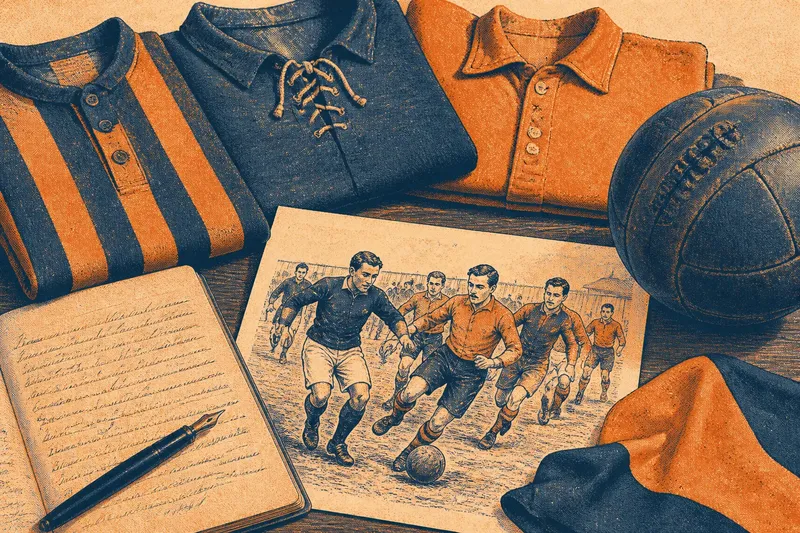
The history of football team colours starts with a practical question: could players tell their teammates from the opposition? In early football, clothing and match customs varied by place and period, so there was no single route from everyday dress to the familiar club kit.
Distinguishing teams depended on local arrangements
Football developed through different local codes and competitions, and clothing practices differed with them. A claim about what every early team wore would be too broad. In accounts of particular matches or clubs, the useful details are the garments recorded, the rules then in force and the conditions of play.
Teams could use common shirts or other visible markers when they needed to make sides easier to identify. What was available and how consistently it could be worn mattered alongside appearance. The sensible historical question is not whether one arrangement was universal, but what a particular side used and why.
Nor should modern television habits be projected backwards. A written account, an illustration or a surviving garment may offer different kinds of evidence, and each has limits. A picture can show a contrast without establishing the precise shade; a later club tradition may preserve a genuine memory, but it does not by itself date the original choice.
Contrast mattered more than a colour’s supposed meaning
For play, the immediate value of colour was visibility. If opposing sides appeared too similar, players and spectators could have difficulty following possession. A difference in shade or another visible feature could help, though the practical solution depended on the match and its rules.
Clothing also had to be obtainable and repeatable. It is safer to describe those as practical considerations than to assign a specific fabric, cost or washing routine to teams without evidence for the place and period. The same caution applies to claims about when clubs first adopted permanent colours.
When an account says a side changed its dress, ask what it actually records: a temporary alternative, a different garment, or a lasting change of club colours. Those are not interchangeable events, even if later summaries make them sound like one neat turning point.
Repeated use gave colours their club associations
A colour could become associated with a club through continued use and recognition. That process need not have begun with a formal plan to create an emblem. Players wore the same visible choice; people who followed the side learnt to recognise it; later generations could inherit the association.
Imagine a neighbourhood side whose members decide, in an invented situation, to wear plain green shirts at their next local fixture. They check that the opposing side will appear in a visibly different colour, then use the green shirts consistently at later matches. The expected observable result is easier recognition during play and, if the habit continues, a growing association between green and that side; it does not establish why any historical club chose its colours.
What is not worth the effort is treating every familiar colour as evidence of an elaborate original symbolism. Unless a period source supports that explanation, distinguish what is documented from what followers later came to feel about it.
How can you assess a claim about football team colours?
What evidence can identify an early club colour?
Look for a contemporary match report, club record or dated image that names or clearly depicts the clothing. Check who produced it and what it can establish: an image may show contrast without revealing an exact shade.
Does a club’s present colour prove its original choice?
No. Present-day colours can reflect changes, and a club’s later account may describe a tradition rather than document its earliest use. Seek dated evidence before treating the current kit as proof of an original decision.
How can you tell a temporary change from a lasting change?
Compare records from more than one occasion and note whether they describe a match-specific alternative or a recurring kit. If the evidence is sparse, report the uncertainty rather than turning a single appearance into a permanent change.
What does an old photograph reveal about colour?
It can show clothing shapes and relative lightness or darkness, but a monochrome photograph cannot reliably name a hue. Use a written source or colour image for shade, and keep any inference proportionate to the evidence.
Use evidence to keep the story in proportion
When reading about the history of football team colours, separate three questions: what a source says the team wore, whether the clothing helped distinguish opponents, and when followers began to associate it with the club. A source may answer one without answering the others.
That distinction keeps the account grounded. A practical choice can become a tradition, but the surviving evidence may not reveal exactly when that happened or what the first wearers intended. The most useful conclusion is often a narrow one: identify the source, state what it supports, and leave the rest open.